
For many homeowners, the climate control system operates as an invisible guardian. When it works perfectly, it is completely out of mind, humming quietly in the background to provide refuge from blistering summer heat waves and freezing winter storms. However, when an aging unit begins to fail, it quickly becomes an inescapable source of stress, physical discomfort, and financial drain. The decision to replace a home’s primary temperature control infrastructure is rarely made lightly. It is one of the most significant, complex, and expensive investments you will make in your property.
Holding onto an inefficient, dying system carries hidden costs that go far beyond the initial price tag of a new unit. You might be paying for escalating energy consumption, enduring poor indoor air quality, or sacrificing the consistent comfort of your living spaces. Upgrading your equipment is not just about replacing metal boxes; it is about modernizing your home’s central nervous system to improve your daily quality of life and protect your property value.
This comprehensive guide will walk you through the entire replacement journey. From evaluating the true financial burden of your current failing setup and selecting the appropriate modern technology, to managing the property during installation day and protecting your investment long-term, you will learn how to navigate this massive undertaking with confidence and strategic foresight.
1. Evaluate the True Cost of Keeping Your Old Unit
Before committing to a massive home improvement project, it is essential to conduct a thorough financial and mechanical audit of your current situation. Homeowners often fall into the trap of paying for incremental fixes, viewing them as minor inconveniences rather than symptoms of a systemic failure. By objectively evaluating the true cost of operating your outdated equipment, you can make a financially sound decision rather than an emotional one based on the sticker shock of a new system.
Calculate Breakdown Frequency and Cumulative Costs
The first step in your evaluation is to look at the history of your system’s performance over the past two to three years. Keep a running tally of every time the system has failed to turn on, made unusual noises, or failed to reach the thermostat’s set temperature.
To determine if a replacement is financially mandated, industry professionals often recommend applying the “$5,000 Rule.” This is a straightforward calculation:
-
Multiply the age of your equipment in years by the estimated cost of your current required fix.
-
If the resulting number exceeds $5,000, it is generally considered a poor financial decision to repair the unit, and replacement is the smarter path.
-
For example, if your system is 12 years old and needs a $450 fix (12 x 450 = 5,400), you are throwing money into a sinking ship.
When you constantly rely on an AC repair service to keep your home habitable during the peak of summer, you are paying a premium for emergency dispatches and temporary band-aids. The cumulative cost of these constant AC repairs often eclipses the down payment or monthly financing cost of a brand-new, highly efficient unit that comes with a protective warranty.
Track Rising Energy Bills
Failing systems do not just cost money when parts break; they bleed your finances silently through sheer inefficiency. As motors age, bearings wear down, and coils become permanently coated in grime, the system must run longer and draw more electricity or fuel to achieve the same indoor temperature.
-
Gather Historical Data: Pull your utility bills from the past three to five years. Look specifically at the peak summer and winter months.
-
Account for Rate Changes: Check with your utility provider to see if the cost per kilowatt-hour or therm has increased.
-
Identify the Usage Spike: If your actual energy usage (not just the dollar amount) has steadily climbed while your lifestyle and thermostat habits have remained identical, your equipment is likely in its final stages of life.
Determine the Breaking Point
There is a psychological and financial threshold every homeowner reaches where the anxiety of an unreliable system outweighs the intimidation of buying a new one. Consider the intangible costs of a failing unit: the sleepless nights in a sweltering bedroom, the anxiety of leaving pets at home when the temperature is unpredictable, and the frantic scramble to find available technicians during a holiday weekend. Recognizing this breaking point early allows you to shop for a replacement proactively, on your own terms, rather than making a desperate, rushed decision when your unit catastrophically fails during the hottest week of the year.
2. Select the Right Technology for Your Home’s Footprint

Once you have decided to replace your system, the next hurdle is choosing the appropriate technology. The residential climate control market has evolved dramatically over the past decade. Simply replacing your old unit with the exact same type of machine might mean missing out on massive efficiency gains or continuing to suffer from the same hot and cold spots that have always plagued your home.
Map Your Infrastructure
Your home’s existing architecture heavily dictates what kind of systems will perform optimally. You must assess the “envelope” of your house before shopping for equipment.
-
Square Footage and Layout: A sprawling, single-story ranch has vastly different airflow requirements than a narrow, three-story townhome.
-
Ductwork Integrity: If your home utilizes forced air, the ductwork must be inspected. Leaky, uninsulated, or undersized ducts will strangle the performance of even the most expensive top-of-the-line equipment.
-
Insulation and Windows: The thermal retention of your home matters. If you have drafty, single-pane windows and poor attic insulation, a smaller, highly efficient system may still struggle to keep up.
Compare Modern Efficiencies
Understanding the alphabet soup of energy ratings is vital for comparing different models and calculating your potential return on investment.
-
SEER2 (Seasonal Energy Efficiency Ratio 2): This is the updated standard for measuring cooling efficiency. The higher the SEER2 rating, the less electricity the unit uses to cool your home. While the federal minimum is typically around 14.3 SEER2 depending on your region, premium units can reach well into the 20s.
-
AFUE (Annual Fuel Utilization Efficiency): This applies to gas or oil furnaces. An AFUE of 80% means 80% of the fuel is converted into usable heat, while 20% escapes as exhaust. Modern high-efficiency furnaces can achieve up to 98% AFUE, nearly eliminating fuel waste.
-
HSPF2 (Heating Seasonal Performance Factor 2): If you are looking at heat pumps, this rating measures heating efficiency over the winter season.
Match System to Space
The default choice is usually a standard split system (an outdoor compressor paired with an indoor air handler), but customized solutions might be necessary depending on your home’s unique footprint.
For older homes with radiators and no existing ductwork, a modern boiler install can dramatically improve heating efficiency without the invasive process of tearing open walls to run metal ducts. Conversely, if you are looking to modernize a historic home, add cooling to an un-ducted addition, or create customized temperature zones for individual bedrooms, ductless heat pumps offer whisper-quiet operation and phenomenal energy savings by delivering conditioned air directly to the specific room they are mounted in.
3. Vet and Select Qualified Professionals Thoroughly

The longevity, efficiency, and reliability of your new system rely just as much on the quality of the installation as they do on the brand of the equipment itself. A premium, ultra-efficient unit installed improperly will perform worse and break down faster than a budget-tier unit installed with meticulous care. Finding the right professionals is the most critical phase of this process.
Verify Credentials
Never take a contractor’s word for their qualifications. The industry is highly regulated for a reason, as improper installations can lead to severe property damage, electrical fires, or carbon monoxide leaks.
-
State and Local Licensing: Ensure the company holds an active, unblemished license required by your state or municipality.
-
Comprehensive Insurance: Request proof of both General Liability insurance (to protect your home from accidental damage) and Worker’s Compensation (to protect you from being sued if a worker is injured on your property).
-
Manufacturer Certifications: Many top-tier equipment brands require technicians to undergo specific training to install their products. Using a certified installer often grants you access to extended factory warranties.
Demand Itemized Quotes
You should aim to secure at least three distinct bids from reputable local air conditioning companies to ensure you are paying a fair market rate. However, a single lump-sum price at the bottom of a page is unacceptable. You must demand an itemized estimate that breaks down the project comprehensively.
-
Equipment Specifications: The quote should list the exact model numbers of the indoor unit, outdoor unit, and thermostat being installed.
-
Scope of Labor: Ensure the quote includes all peripheral labor, such as hauling away the old equipment, retrofitting the existing plenum (duct transition), and upgrading electrical wiring or gas lines if necessary.
-
Permits and Fees: A legitimate professional will always pull the required municipal permits. Ensure the cost of the permit and the coordination of the city inspection are explicitly included in the contract.
Look Beyond the Price Tag
While it is tempting to go with the lowest bidder, unusually cheap estimates often signal corner-cutting. They might be planning to reuse old, degraded copper refrigerant lines, ignore necessary ductwork modifications, or employ underpaid, inexperienced labor.
When researching HVAC contractors, dive deep into their reputation. Look past the star rating and read long-form customer reviews across multiple platforms. Pay special attention to how the company responds to negative reviews; a business that takes ownership of mistakes and rectifies them is often more trustworthy than one that argues with customers online. Check their standing with the Better Business Bureau and ask for references from past clients who had similar systems installed.
4. Prepare Your Home and Finalize the Project Scope

Once the contract is signed and the installation dates are set, your focus must shift to preparation. Swapping out a central climate system is a major construction project that will temporarily disrupt your household. By proactively preparing your home and establishing clear boundaries with the crew, you can prevent accidental damage and ensure the work proceeds smoothly.
Clear the Work Zones
Technicians will be moving heavy, bulky equipment through your home, often navigating tight hallways, staircases, and basements. You need to create a frictionless environment for them to work in.
-
Provide Unobstructed Pathways: Move all furniture, area rugs, floor lamps, and decorative items out of the direct path from your front door to the indoor unit (usually located in a basement, attic, or utility closet).
-
Clear the Outdoor Area: Trim back any overgrown bushes, tree branches, or thorny vines surrounding the outdoor compressor. The crew will need a minimum of three feet of clearance on all sides of the unit to work safely.
-
Secure Pets and Children: Installation involves loud noises, heavy lifting, open doors, and potentially hazardous tools. Keep pets locked in a secure room far from the work area, or consider boarding them for the day. Ensure small children are kept safely away from the construction zones.
Review Contract Guarantees
Before the first wrench is turned, sit down and review the fine print of your finalized contract one last time. You want to ensure you are fully protected in case something goes wrong during the teardown or installation phase.
-
Property Damage Clauses: Confirm who is responsible if a wall is scuffed, a floorboard is scratched, or landscaping is crushed during the removal of the heavy old equipment.
-
Timeline Commitments: Ensure there is a clearly stated start date and expected completion date. While unforeseen complications can arise, there should be an understanding of how delays will be communicated and handled.
-
Labor Warranties: Distinct from the manufacturer’s warranty on the equipment, the company performing the work should offer a guarantee on their labor (typically 1 to 2 years) to cover any installation-related defects like leaking drain lines or loose electrical connections.
Establish Communication
Clear, professional communication is the key to a stress-free project. Establish a rapport with the project manager or the lead AC contractors upon their arrival. Walk through the house together to confirm the project scope matches what was promised by the salesperson. Take this time to point out any quirks about your home—such as a sensitive circuit breaker or a tricky attic ladder—so the HVAC installers are fully aware of their environment before they begin the heavy lifting.
5. Navigate Installation Day with Confidence
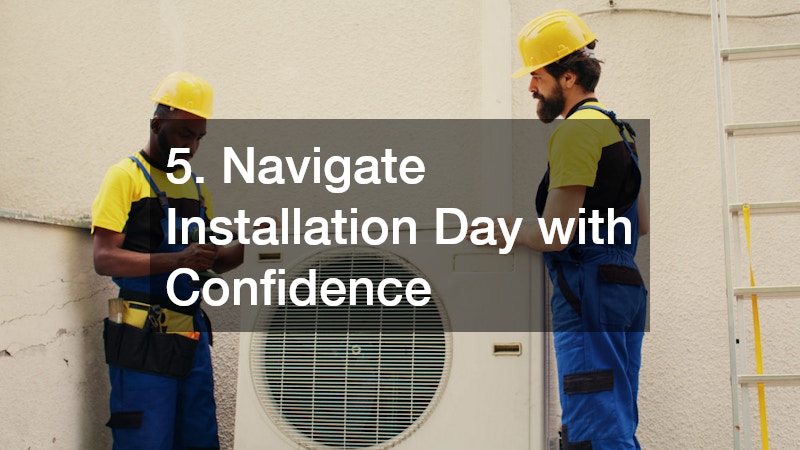
Installation day is a whirlwind of activity. Depending on the complexity of your home and the system being installed, the process can take anywhere from a single full day to several days. Knowing what to expect as the day unfolds will keep your anxiety at bay and allow you to monitor the progress intelligently without micromanaging the crew.
Anticipate the Disruption
Be prepared for the realities of active residential construction. The teardown phase is often the most chaotic part of the day.
-
Noise and Vibrations: You will hear the screech of metal being cut, the heavy thud of old units being uninstalled, and the continuous whine of power drills. If you work from home, it is highly recommended to relocate to a coffee shop or a friend’s house for the day.
-
Utility Shut-Offs: The crew will need to temporarily disconnect the electricity at the breaker panel and shut off the gas lines (if applicable) to safely remove the old system.
-
Dust and Debris: While professional crews will use drop cloths and wear shoe covers, minor dust is inevitable when dealing with old ductwork and attic spaces. Plan to do a light dusting and vacuuming after they leave.
Midday Check-In
While you should stay out of the crew’s way for safety reasons, it is perfectly acceptable and encouraged to perform a midday check-in.
-
Verify the Equipment: Ask the lead technician to show you the new boxes before they are opened. Visually confirm that the brand and model numbers on the packaging exactly match the equipment listed on your signed contract. Mistakes happen at supply warehouses, and it is much easier to swap a unit before it is bolted to your floor.
-
Assess the Progress: Ask if they are on schedule or if they have run into any hidden complications, such as rotted plywood under the old unit or mismatched electrical wiring, which could alter the timeline.
Monitor the Calibration
The physical placement of the equipment is only half the job. The final hours of the installation are dedicated to intricate calibration. The technicians will pull a vacuum on the refrigerant lines to remove all moisture and impurities before releasing the charge. They will wire in the new thermostat, test the sequence of operations, and measure the temperature drop across the evaporator coil to ensure optimal performance. Premium AC services will also include a process called “balancing,” where HVAC services technicians adjust the dampers in your ductwork to ensure every room in the house receives the appropriate amount of airflow, eliminating the persistent hot and cold spots you may have suffered with your old unit.
6. Perform a Rigorous Post-Installation Walkthrough
The project is not officially complete until you are satisfied with the final result. Do not sign the final completion paperwork or hand over the final payment until a thorough post-installation walkthrough has been conducted. This is your opportunity to catch minor issues, understand your new technology, and set yourself up for long-term success.
Demand a System Demonstration
Modern climate control systems, especially those featuring variable-speed motors and smart home integration, operate very differently than the clunky, single-stage units of the past.
-
Thermostat Mastery: Have the technician walk you through every feature of your new digital thermostat. Learn how to set a daily schedule, how to switch between heating and cooling, how to connect it to your home Wi-Fi network, and how to operate the accompanying smartphone app.
-
Filter Replacement: Ask the technician to show you exactly where the air filter is located, how to slide it out, and what specific MERV rating and size of filter you need to buy in the future.
-
Breaker and Shut-off Locations: Ensure you know where the emergency power disconnect switches are located both inside and outside the house in case you ever need to shut the system down quickly.
Inspect for Cleanliness and Craftsmanship
A high-quality installation looks as good as it performs. Walk around the indoor and outdoor units to inspect the workmanship.
-
Check the Seams: Look at the metal ductwork transitions (the plenum) connected to the indoor unit. They should be neatly sealed with mastic (a thick grey paste) or specialized foil tape to prevent air leaks.
-
Inspect the Wiring: All electrical wires should be neatly bundled and run through protective conduit, not left dangling hazardously.
-
Confirm Debris Removal: Check your basement, attic, and yard. The crew should have hauled away the old equipment, swept up any metal shavings, removed all cardboard packaging, and left your property exactly as they found it.
Lock In Ongoing Maintenance
Your new system represents a significant financial investment, and protecting that investment requires ongoing vigilance. Just like a brand-new car, a brand-new climate system requires regular oil changes and tune-ups to maintain its peak performance.
Most manufacturers explicitly state in their warranty documentation that the warranty will be voided if the system is not subjected to annual professional maintenance. Before the installation crew leaves, ask about enrolling in a preventive maintenance agreement. These agreements typically include two visits a year (one before summer, one before winter) to clean the coils, check the refrigerant levels, inspect electrical contactors, and clear the condensate drain lines. By proactively scheduling these check-ups, you ensure your newly installed system will deliver reliable, highly efficient comfort for the next 15 to 20 years.
