
Highlights:
- Well-maintained bushes play a major role in first impressions, helping a home look cleaner, more structured, and more valuable from the street.
- Preparation is just as important as trimming itself, including inspecting plants, identifying problem areas, checking for pests or nests, and planning the final shape before making cuts.
- Proper timing and consistency matter more than perfection, with light seasonal maintenance generally producing better results than infrequent heavy trimming sessions.
- Shaping bushes effectively requires a structured approach, focusing on symmetry, gradual cuts, and maintaining natural proportions rather than forcing artificial shapes.
- Over-trimming is one of the most common mistakes and can damage plant health, so limiting cuts and reassessing frequently helps preserve fullness and balance.
- Professional-looking results come from repeatable techniques such as layering, outlining, stepping back to check perspective, and using light, controlled passes.
- Tool condition and cutting consistency significantly affect the final look, with sharp tools and steady movements ensuring clean cuts and healthier plant recovery.
Your home’s exterior is the first thing people notice, and whether you realize it or not, your bushes play a huge role in that first impression. Overgrown, uneven, or poorly shaped shrubs can make even a well-maintained house look neglected. On the other hand, neatly trimmed bushes can instantly make your property look cleaner, more organized, and more valuable.
The good news is that you don’t need to be a landscaping expert to get professional-looking results. With the right tools, timing, and techniques, trimming bushes can be one of the fastest ways to improve curb appeal without spending a fortune. This guide breaks everything down into simple, actionable steps so you can confidently shape your shrubs like a pro.
Why Does Trimming Bushes Matter for Curb Appeal?
Bushes are often called the “frame” of your home’s exterior because they sit at eye level and guide attention toward your house. When they’re well-maintained, they create balance, structure, and visual harmony. When they’re not, they dominate the view in a negative way.
Here’s what properly trimmed bushes do for your home:
- Create clean lines that make your yard look intentional
- Highlight architectural features like windows and entryways
- Improve the perceived size and openness of your front yard
- Signal that the property is well cared for
- Add a polished, finished look even without major landscaping upgrades
In fact, landscape maintenance is often one of the most cost-effective improvements when considering home improvement projects to boost value because it delivers visible results almost immediately.
If you want quick visual impact without remodeling or expensive upgrades, bush trimming is one of the easiest wins.
What Tools Do You Actually Need to Trim Bushes Properly?
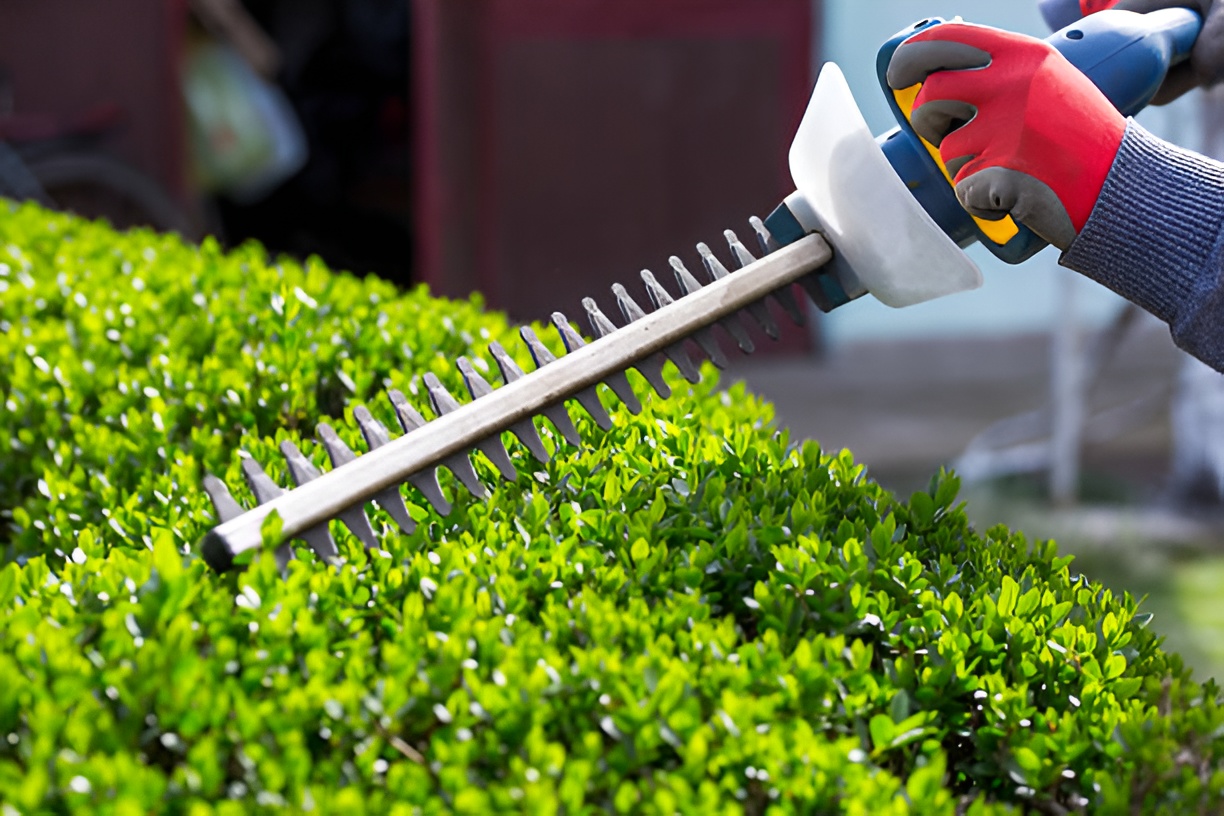
Before you start cutting, having the right tools makes a huge difference in both efficiency and appearance. You don’t need professional-grade equipment, but you do need reliable basics.
Here’s what most homeowners should have:
- Hand pruners for small branches and precision cuts
- Hedge shears for shaping and smoothing surfaces
- Electric or gas hedge trimmer for larger shrubs
- Loppers for thicker, woody branches
- Gloves to protect your hands from scratches
- Safety glasses to avoid flying debris
Optional but helpful:
- Tarps for easy cleanup
- A small rake for collecting trimmings
- Disinfectant spray for tools (prevents plant disease spread)
Using the right tool for the right branch is important. For example, hedge trimmers are great for shaping, but they’re not ideal for thick stems that need a clean cut with loppers.
When Is the Best Time to Trim Bushes for a Clean Look?
Timing plays a major role in how healthy and attractive your bushes look after trimming. Cutting at the wrong time can slow growth or reduce flowering.
In general:
- Late winter or early spring is ideal for most bushes
- After flowering is best for flowering shrubs
- Mid-summer touch-ups help maintain shape
- Avoid heavy trimming in late fall, which can stress plants before winter
If your goal is curb appeal, consistency matters more than perfection. Light maintenance trimming done regularly will always look better than one heavy, irregular cut once a year.
A good rule of thumb: if branches are blocking walkways, windows, or growing unevenly, it’s time to trim.
How Do You Prepare Bushes Before Trimming?
Preparation is the step most homeowners rush through, but it’s also the one that determines whether your bushes end up looking professionally shaped or slightly uneven. A few minutes of planning can save you from cutting mistakes, over-trimming, or damaging healthy growth.
Start with a slow, full inspection of each bush. Don’t just look at the front—walk around it and check it from multiple angles. This helps you understand its natural shape and spot problem areas that aren’t obvious from one viewpoint.
Before you make any cuts, look for:
- Dead or brittle branches that snap easily
- Discolored leaves that may indicate disease
- Overlapping branches that block airflow
- Areas where growth looks uneven or “lopsided”
Once you’ve identified problem areas, mentally map out what you want the bush to look like after trimming. This step is often overlooked, but it prevents random cutting and helps you stay consistent.
It also helps to step back and view your bushes from the street. This “curb appeal perspective” is crucial because what looks fine up close can appear messy or unbalanced from a distance. Your goal is visual harmony from the viewer’s point of entry, not just plant health.
Another important preparation step is checking for wildlife. Birds, small nests, or insects can sometimes hide in dense shrubs. Removing branches too early in the season can disturb nesting activity, so always do a quick check before trimming.
A few additional prep tips:
- Lightly water bushes the day before trimming so they’re hydrated and less stressed
- Clean your tools before starting to prevent spreading plant disease
- Lay down a tarp if you want faster cleanup later
- Wear gloves and safety glasses even for small jobs
When you take time to prepare properly, the actual trimming becomes smoother, faster, and far more controlled.
What’s the Correct Way to Shape Bushes?
Shaping bushes is where basic yard maintenance turns into real curb appeal improvement. The goal isn’t just to shorten growth—it’s to guide the plant into a clean, intentional structure that enhances your home’s overall look.
Start by removing anything that is clearly dead, broken, or diseased. This clears the “visual noise” and gives you a better sense of the bush’s natural structure. Once that’s done, you can begin refining the shape.
A simple and effective shaping process looks like this:
- Begin at the top and work downward gradually
- Trim uneven or protruding branches to restore balance
- Maintain symmetry by constantly comparing both sides
- Step back every few minutes to assess overall shape
- Make small, controlled cuts instead of large aggressive ones
One of the most important shaping principles is maintaining proportion. Most bushes look best when they are slightly wider at the base than at the top. This allows sunlight to reach lower branches, prevents thinning at the bottom, and creates a more natural silhouette.
You also want to think in terms of structure rather than random cutting. Instead of asking “what should I cut?”, ask “what shape do I want this bush to support my home?”
Common shaping styles include:
- Rounded forms for a soft, traditional curb appeal
- Square or rectangular edges for a clean, modern aesthetic
- Natural shapes that blend into informal or garden-style landscapes
- Layered shaping that creates depth in larger shrubs
If you’re unsure about direction, always start with light trimming. It’s easier to refine shape gradually than to fix over-cut sections. Once branches are removed, they won’t grow back into place quickly, so restraint is key.
A helpful mindset is to think of bush trimming as sculpting rather than cutting.
How Can You Avoid Over-Trimming and Damaging Bushes?
Over-trimming is one of the most common mistakes homeowners make, and it can take months for bushes to recover. In some cases, it can permanently alter growth patterns or expose bare, unattractive stems.
The biggest risk comes from trying to make everything look “perfect” too quickly. In reality, healthy bushes need gradual shaping, not aggressive cutting.
To protect your plants, follow these guidelines:
- Never remove more than 25–30% of total growth at one time
- Avoid cutting deep into old, woody stems unless absolutely necessary
- Do not flatten the top of flowering bushes unless that species requires it
- Stop periodically and evaluate overall balance from a distance
Another important habit is pacing yourself. Instead of trimming continuously, take breaks every few minutes to step back and review your work. This helps you catch asymmetry before it becomes a bigger problem.
Watch for warning signs that you may be over-trimming:
- The bush starts looking “thin” instead of full
- You notice large gaps in foliage forming
- The shape begins to look too geometric or unnatural
- You feel tempted to keep cutting just to “even things out”
If you notice any of these, pause immediately. Over-correcting often leads to even more imbalance. A helpful rule of thumb: if you’re unsure whether to cut a branch, leave it for now. You can always trim later, but you can’t undo a cut. Healthy trimming should enhance the plant’s natural shape, not force it into something it isn’t meant to be.
What Are the Best Techniques for a Clean, Professional Finish?
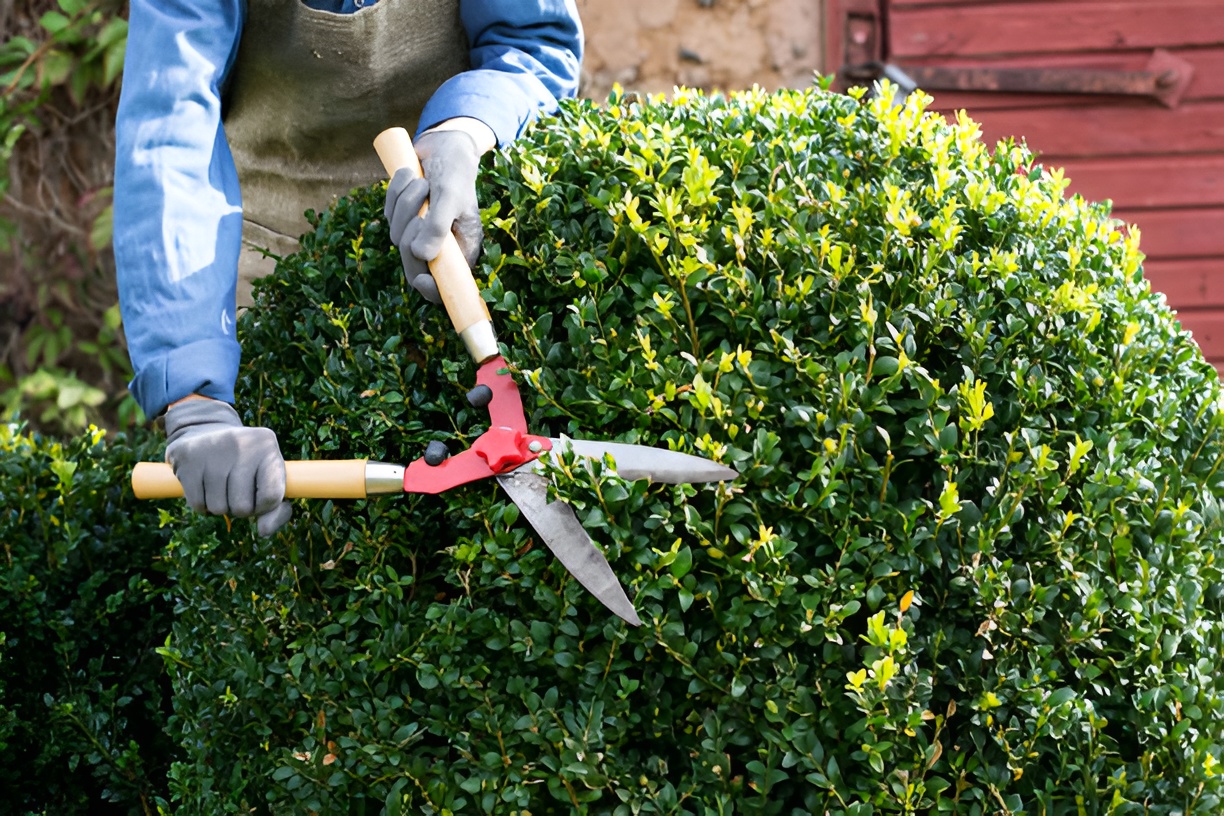
Achieving a professional-looking result is less about expensive tools and more about technique, patience, and consistency. Landscapers rely on repeatable methods that ensure bushes look clean and evenly shaped from every angle.
One of the most effective approaches is working in layers. Instead of trying to shape everything in one pass, you gradually refine the bush step by step.
Here are some proven techniques:
The Layering Method
The layering method is all about building the shape gradually rather than trying to achieve the final look in a single trimming session. Think of it like sculpting—you remove small amounts of growth in stages so you don’t accidentally over-cut or create uneven patches.
How it works in practice:
- Start at the top of the bush and work downward in small sections
- Remove the most overgrown parts first to reveal the natural structure
- Gradually refine each “layer” of foliage instead of cutting everything at once
- Step back after each layer to reassess balance and symmetry
This method is especially useful for large or overgrown bushes because it prevents the common mistake of cutting too deep too quickly. It also helps you maintain a fuller, healthier appearance since you’re not stripping too much foliage at once.
The biggest advantage is control—you always stay aware of how the final shape is developing instead of guessing and correcting after the fact.
The Outline Method
The outline method focuses on establishing the overall shape of the bush before worrying about fine details. It’s similar to drawing a sketch before filling in shading.
To use this technique effectively:
- First identify the desired silhouette from a distance
- Lightly trim the outer edges to define boundaries
- Focus on symmetry between the left and right sides
- Avoid cutting deep into the bush during this stage
- Refine edges only after the general shape is established
This method helps prevent one-sided trimming or uneven curves, which are some of the most noticeable curb appeal mistakes. By locking in the outline first, you create a visual “frame” that guides all later cuts.
It’s especially helpful for shaping bushes near walkways or windows where clean lines matter most.
The Step-Back Check Method
The step-back check method is one of the simplest but most powerful techniques used by professionals. It ensures that your work looks good from the perspective that actually matters—how people see your home from a distance.
Here’s how to apply it properly:
- Stop trimming every few minutes and walk 10–20 feet away
- View the bush from the street or main approach angle
- Check for uneven height, lopsided sides, or awkward gaps
- Compare the bush to surrounding plants for balance
- Make small corrections only after stepping back
Up close, it’s easy to lose perspective and over-focus on tiny imperfections that don’t matter from a distance. This method prevents overworking the bush and helps you prioritize overall shape instead of minor details.
It’s also a great way to avoid over-trimming because it forces you to pause and reassess instead of continuously cutting.
The Light-Pass Method
The light-pass method is all about control and precision. Instead of removing large sections of growth in one cut, you make multiple small trimming passes to gradually refine the shape.
To use this technique:
- Use light, controlled cuts rather than deep snips
- Trim a small amount, then reassess before continuing
- Focus on refining edges gradually instead of reshaping aggressively
- Avoid rushing through thick areas in a single motion
- Repeat passes until the shape looks smooth and balanced
This method significantly reduces the risk of mistakes because each cut is minor and reversible in effect. It also creates a much cleaner finish because you’re smoothing the surface gradually instead of hacking into it.
Light passes are especially useful for hedge trimmers, where it’s easy to accidentally remove too much at once.
Why Tool Sharpness and Control Matter
Even the best trimming technique can fall apart if your tools are not in good condition. Sharp, clean tools are essential for both plant health and visual quality.
When blades are dull, they don’t slice cleanly—they tear through branches. This causes:
- Jagged, uneven edges that look messy from the street
- Slower recovery time for the plant after trimming
- Increased risk of disease entering damaged stems
To avoid these issues:
- Clean tools before and after each use
- Sharpen blades regularly, especially hedge trimmers
- Wipe tools with disinfectant to prevent spreading plant disease
- Check for rust or damage before starting
Sharp tools create clean cuts that heal faster and keep bushes looking naturally smooth instead of frayed or rough.
The Importance of Consistent Cutting Movement
Beyond techniques and tools, your cutting motion itself plays a big role in the final result. Consistency is what separates a tidy, professional-looking bush from one that looks uneven or rushed.
Try to maintain:
- Steady hand movements without jerking or rushing
- Even pressure with each cut
- Similar cutting angles across both sides of the bush
- A slow, controlled pace instead of fast, random trimming
Inconsistent movement leads to patchy surfaces where some areas are heavily cut while others remain uneven. Over time, this becomes very noticeable, especially when viewed from the street.
The goal is to create a natural but intentionally maintained look—clean, structured, and balanced without appearing overly artificial or harshly shaped.
How Do Trimmed Bushes Improve the Overall Front Yard Design?
Trimmed bushes do more than improve plant health—they shape the entire visual structure of your front yard. They act as natural design elements that guide attention and create order within your landscape.
When bushes are properly maintained, they help define space and bring balance to otherwise open or uneven areas. Instead of random greenery, your yard starts to feel intentional and structured.
Here’s how well-trimmed bushes improve overall design:
- Frame entryways and walkways in a visually appealing way
- Balance empty or oversized spaces in the yard
- Add layers that create depth and dimension
- Highlight architectural features like windows and doors
- Create contrast against hard surfaces like walls, stone, or pavement
Even small improvements in bush shape can dramatically change how your home is perceived from the street. This is especially important when considering long-term property presentation, since landscaping is one of the first things people notice.
Trimmed bushes also help guide the eye. Instead of looking randomly across the yard, visitors naturally focus on the entrance or focal point of your home. This subtle visual control makes your property feel more polished and well-designed.
In many cases, homeowners are surprised by how much cleaner their entire property looks after simply reshaping overgrown shrubs.
How Often Should You Trim Bushes to Maintain Curb Appeal?
Consistency is what separates a well-maintained yard from one that looks neglected. Waiting too long between trims leads to overgrowth, uneven shapes, and eventually more drastic cutting sessions that can stress the plants.
A good trimming schedule depends on growth speed and plant type, but general guidelines work well for most homes.
Typical maintenance timing includes:
- Fast-growing bushes: every 4–6 weeks during active growing seasons
- Moderate or slow-growing shrubs: every 2–3 months
- Flowering bushes: trim after blooming, with occasional light shaping between cycles
The key is not just frequency, but consistency. Light, regular trimming keeps bushes in shape without requiring heavy corrections later.
A steady routine helps you:
- Maintain clean, even structure year-round
- Prevent bushes from blocking windows or pathways
- Avoid sudden overgrowth that looks messy from the street
- Reduce long-term maintenance effort
Think of trimming as ongoing maintenance rather than a one-time project. Small adjustments done regularly always produce better curb appeal than occasional major cuts.
When bushes are kept under control, your entire front yard stays visually “ready,” which is exactly what creates strong curb appeal.
What Mistakes Should You Avoid When Trimming Bushes?
Even small errors can affect the final appearance of your landscape.
Avoid these common mistakes:
- Cutting bushes into unnatural shapes
- Ignoring the natural growth pattern of the plant
- Using dull or dirty tools
- Trimming at the wrong season
- Removing too much foliage at once
- Forgetting to clean up clippings afterward
Another overlooked mistake is trimming only the outer layer. This creates a “shell” effect where the outside looks neat, but the inside becomes dense and unhealthy.
How Does Bush Trimming Affect Home Value and Perception?
Curb appeal directly influences how people perceive your property. Even before stepping inside, buyers or guests form opinions based on exterior presentation.
Trimmed bushes:
- Signal regular maintenance and care
- Make the home appear newer and more valuable
- Increase visual symmetry and balance
- Reduce perceived maintenance concerns
When combined with other small upgrades like fresh mulch or cleaned walkways, bush trimming can significantly elevate overall presentation. It’s one of those improvements that feels simple but has a surprisingly strong impact.
How Can You Combine Bush Trimming With Other Quick Yard Upgrades?
If you want maximum curb appeal impact, trimming bushes works best as part of a small landscaping refresh.
Consider pairing it with:
- Fresh mulch around garden beds
- Edging along sidewalks and driveways
- Removing weeds from flower beds
- Cleaning exterior surfaces like fences or walls
- Adding subtle outdoor lighting near shrubs
These small improvements work together to create a polished and intentional look without requiring a full landscape renovation.
Final Thoughts on Achieving a Polished Exterior Look
Trimming bushes is one of the simplest yet most powerful ways to transform your home’s exterior. It doesn’t require expensive tools or advanced landscaping knowledge—just attention to detail and a bit of consistency.
When done correctly, bush trimming enhances structure, improves symmetry, and instantly boosts curb appeal. More importantly, it creates a sense of care that people notice right away.
Whether you’re preparing your home for guests, planning to sell, or just want to enjoy a cleaner outdoor space, well-maintained bushes can make a noticeable difference in how your entire property feels.
